Purposeful learning
Teacher-guided lessons are kept to roughly 20–30 minutes to match a young child’s attention and keep learning active.
Preschool and pre-K · Ages 2–5
Starbright balances purposeful teaching with play, creativity, movement, nourishing meals, and rest, so children build skills without losing the joy of being little.
Our daughter loved every day of her experience at Starbright and day after day she would tell us on the way back: ‘Today was the best day ever...’
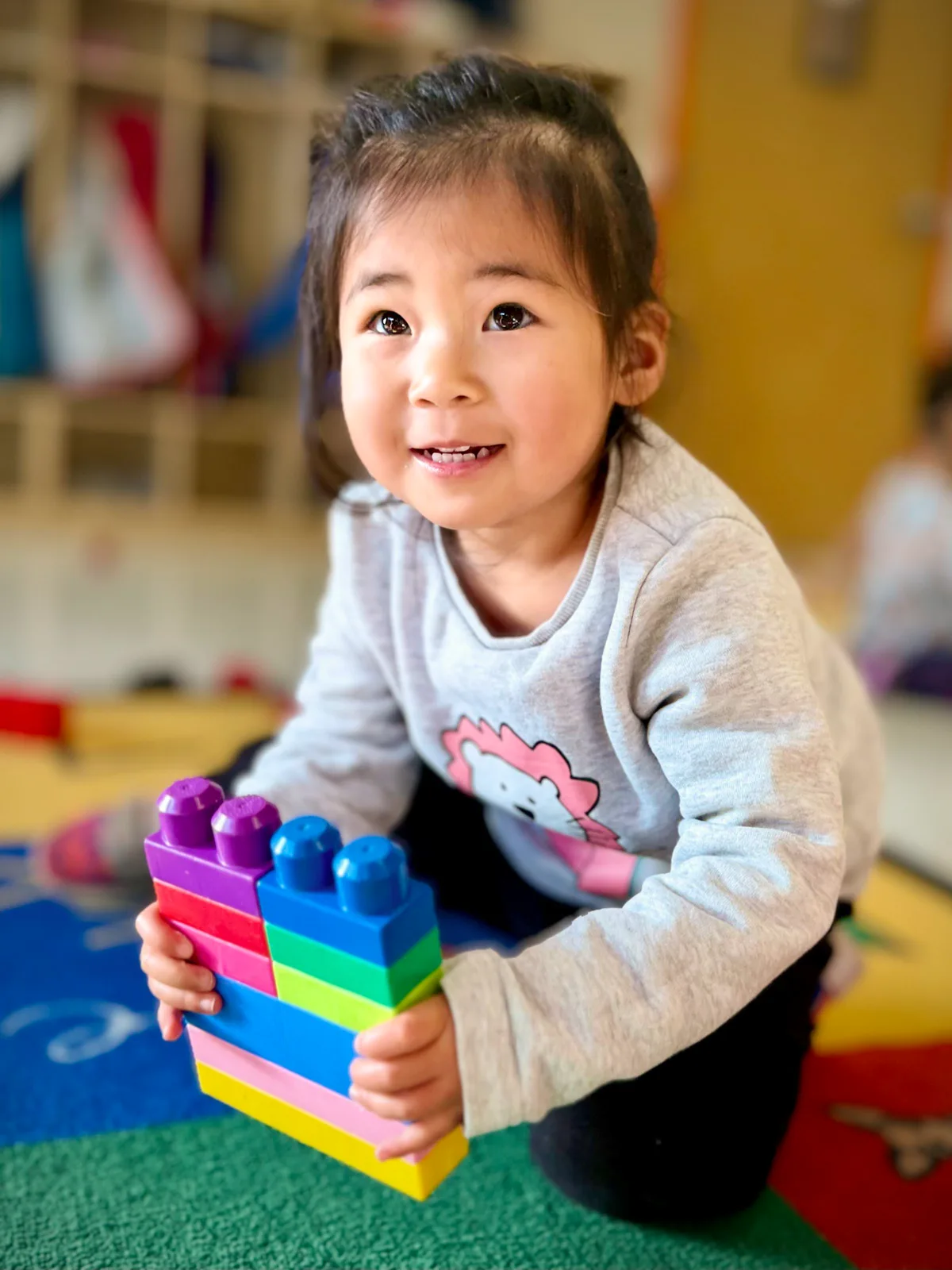
The Starbright difference
Teacher-guided lessons are kept to roughly 20–30 minutes to match a young child’s attention and keep learning active.
Educational toys, outdoor play, music, dance, and art give children many ways to practice new skills.
Each campus has an onsite kitchen and chef. Four meals are prepared daily and included in tuition.
Children change into pajamas and rest in individual beds with linens while soft classical music plays.
Children have a daily nap in their pajamas and in small beds... again, big difference from other preschools where kids sleep on the floor in the sleeping bags with their shoes and clothes on.
Starbright’s curriculum intentionally connects thinking, creativity, physical confidence, and relationships. Progress in one area helps reinforce the others.
The confidence to ask why: language, early literacy, number sense, patterns, and spatial thinking.
Daily opportunities to make, sing, move, imagine, and develop fine-motor control through the arts.
Strong, capable, growing bodies: motor practice woven through classroom projects, movement, and outdoor play.
Daily social-emotional learning helps children grow more independent, cooperative, attentive, and aware of others.
Through your guidance in arts, music, theatre, socio-emotional learning, and academics, our child has flourished not just as a student but as a confident and compassionate individual.
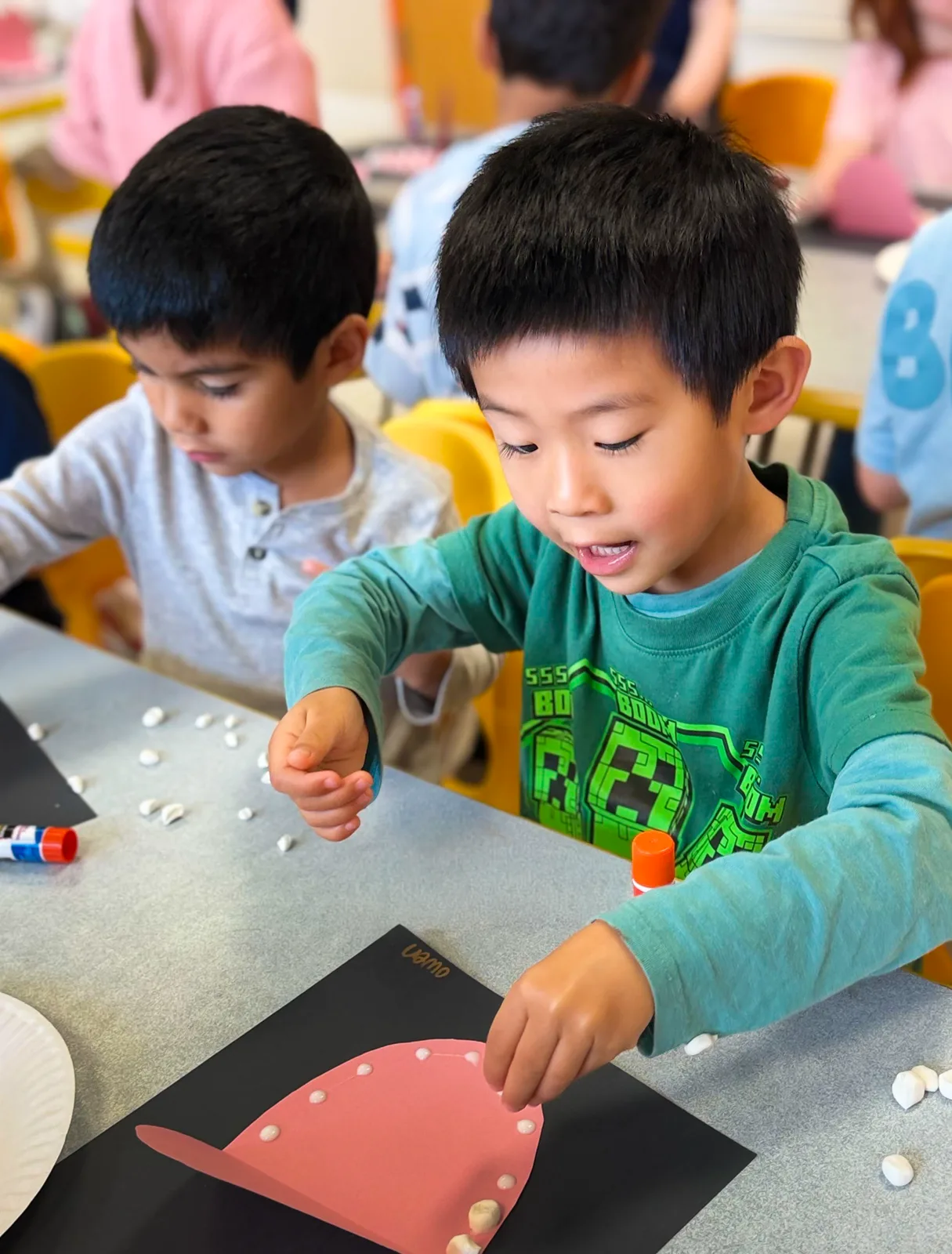
The first weeks
The first goodbye is often harder for parents than for children, and we treat both with care. Teachers meet new students with patience, warm arms, and time. Cubbies get names, routines become familiar, and tears, when they come, are held kindly until they fade.
Children settle into the rhythm sooner than most parents expect. Soon they are telling their teachers about their weekend before their parents reach the door.
Ms. Sveta is so warm and welcoming, every morning for 4 months she hugged my son and held him when he cried at drop-offs upon starting school. She is a gem!
After only one week of getting used to new place and schedule, my little one, literally, ran to meet her teachers and classmates every single morning...
He loves going to this preschool, which to me speaks louder than words.
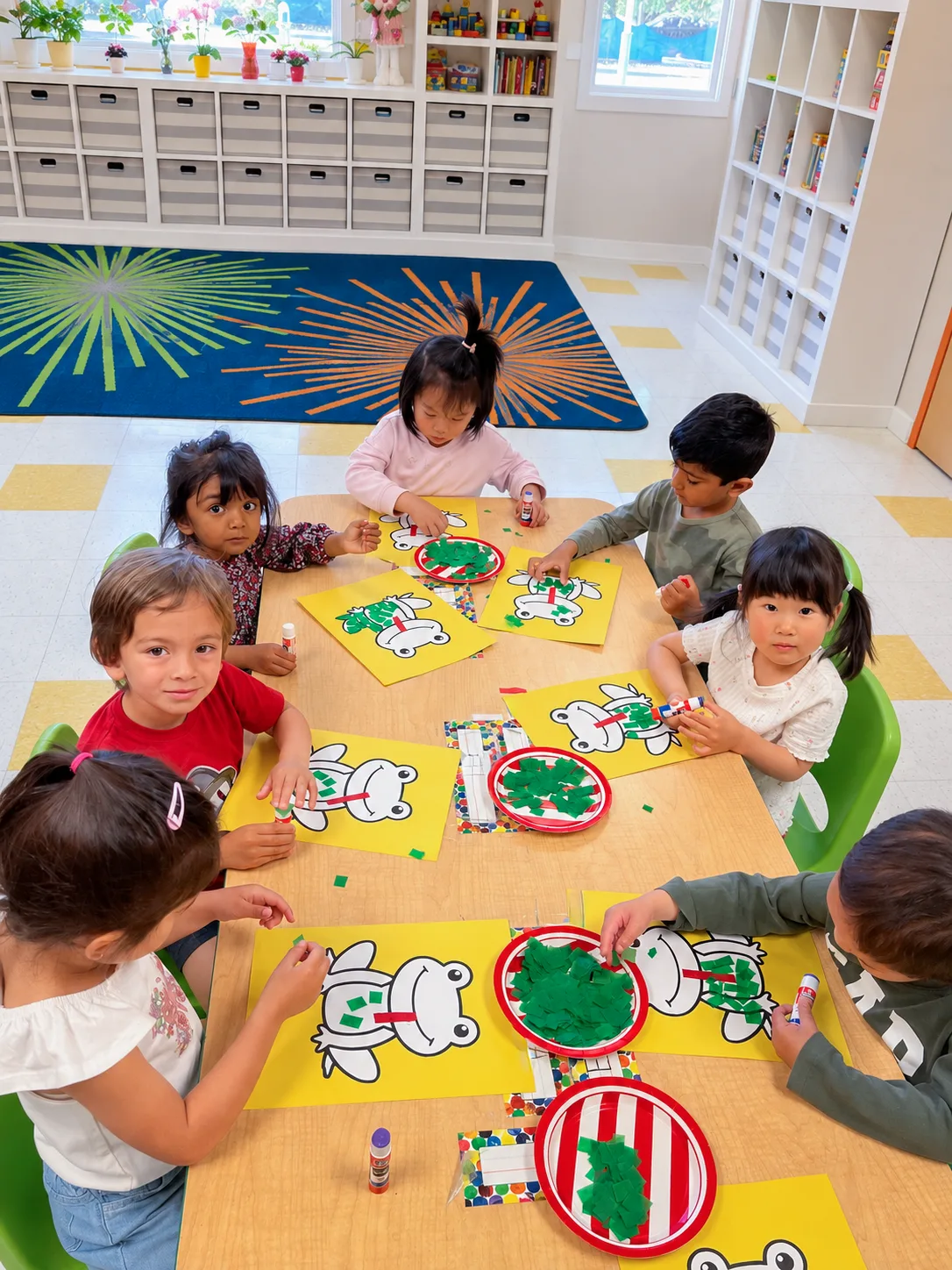
See the day, not just the syllabus
A Starbright day moves between group lessons, learning games, educational toys, stories, art, daily music with live accompaniment, outdoor play, meals, and rest. Optional onsite enrichment lets families add focused activities without another drive across town.
Every book and toy has a home your child can see and reach, so students start, finish, and put away their own work. That's independence, built into the design of every classroom.
The school didn't just focus on academics, but also fostered creativity and life skills with cooking days, science experiments, recitals, tea parties, and even bagel days with parents — activities that created lasting memories and strengthened the bond between children and families.
Questions parents ask
Preschool starts at age 2, with classrooms grouped by age from the first year through TK and kindergarten. Each level builds on the one before it.
With patience, warm arms, and time. Teachers stay close through drop-offs, routines become familiar quickly, and children settle into the rhythm sooner than most parents expect.
Every classroom has two teachers. Across the school, classes average 18 students, about nine per teacher, so each child is known and looked after.
Short 20 to 30 minute lessons alternate with learning games, stories, art, daily music with live accompaniment, outdoor play, four meals, and a real rest in real beds. The daily activities page walks through the whole rhythm.
You will see it daily: projects come home, and teachers greet you at drop-off and pickup and are always ready to talk. Teachers give each child individual attention and know exactly where they are growing.
Yes. Starbright has always been a multilingual, multicultural community, a mirror of Silicon Valley itself. Instruction is in English, and parents from many backgrounds tell us they found a second family here.
If you are looking for great school with strong academical program and social skills, that's the place for you, no matter which language you speak at home.
Come see Starbright in action
Meet the teachers, explore the classrooms, and see how academic excellence and family warmth live side by side.